Downloadable Book
 Downloadable Book
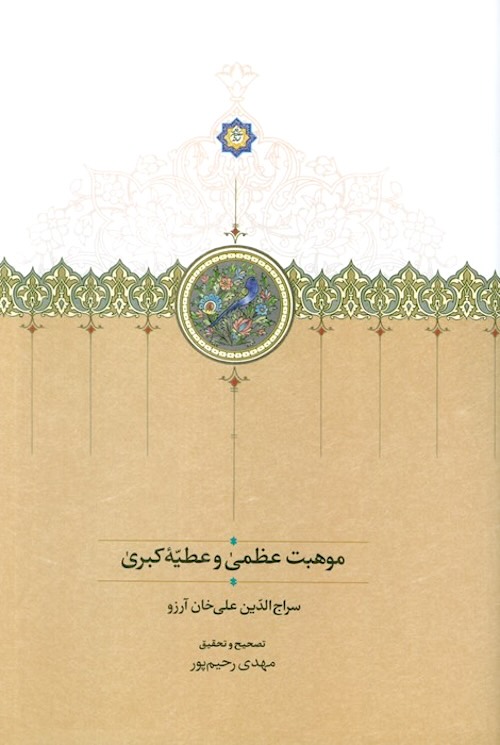
Mawhibat-i ‘uẓmá va ‘aṭīyah-i kubrá
موهبت عظمى و عطيه كبرى
Price range: £14.03 through £45.63
This scholarly edition presents two significant treatises on Persian rhetoric and eloquence, *Mawhibat-i ‘uẓmá* and *‘Aṭīyah-i kubrá*, authored by the prominent 18th-century literary critic and linguist, Sirāj al-Dīn ‘Alī Khān Ārzū. Edited by Mahdī Raḥīmʹpūr, the work offers a critical examination of the sciences of *ma‘ānī* (semantics) and *bayān* (exposition) within the context of Persian literary tradition. Ārzū, known for his keen insights into the "Indian Style" (Sabk-i Hindī), provides detailed analyses of rhetorical devices, figures of speech, and the subtleties of poetic expression. This publication, released by Duktur Maḥmūd Afshār in collaboration with Sukhan, serves as a vital resource for researchers of classical Persian literature and stylistic studies, shedding light on the theoretical underpinnings of literary aesthetics in the late Mughal and early modern periods of Īrān and India.
این کتاب دربردارندهی دو رساله از سراجالدین علیخان آرزو، ادیب و منتقد ادبی سرشناس هندی در سدهی دوازدهم هجری است. موهبت عظمیٰ در علم معانی و عطیهی کبریٰ در دانش بیان، به گفتهی نویسنده نخستین رسالههای تألیفشده در دو علم مذکور بر اساس اشعار فارسی (با ذکر حدود ۳۹۰ بیت و ۶۰ مصرع) است. نکته سنجی، شم انتقادی و سبک شناسی آرزو به نوشتهی او ارزش و اعتبار ویژه ای بخشیده و دو رسالهی او میتواند در زمینهی بلاغت از منابع درسی دانشگاهها باشد.
Related products