Downloadable Collection
 Downloadable Collection
Rūznāmah-i Taraqqī (Qājār) – 1325 H.Q. (5 Issues)
روزنامه ترقی (قاجار) - سال ۱۳۲۵ (۵ شماره)
Price range: £15.73 through £46.25
The publication 'Taraqqī' was the title of two political and social periodicals during the Qajar and Pahlavi eras. This publication was first printed weekly during the Constitutional era by Mīrzā Muḥammad ʻAlī Khān Tihrānī. The second version was published by Luṭf Allāh Taraqqī in the 1920s.
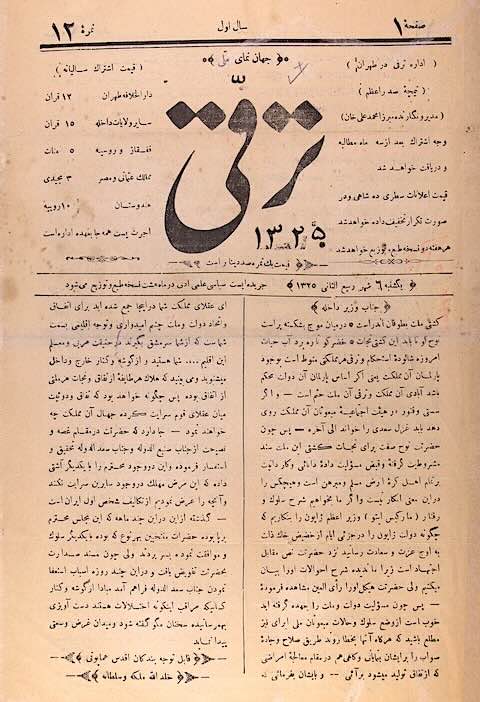
'Taraqqī', under the management and authorship of Mīrzā Muḥammad ʻAlī Khān Tihrānī, known as 'Islāmbūlī', began publication in Tehran on 17 Ṣafar 1325, 1 April 1907. This periodical was published in 4 pages, with two issues per week. The editor's name appeared at the end of some issues of 'Taraqqī'. The printing of this publication was lithographic and took place at the Imperial Press under the management of ʻAbd Allāh Qājār.
The various prices based on the currency units of regional countries mentioned on the first page of this publication indicate that its circulation area, in addition to different parts of Iran, also covered regions such as the Caucasus, Russia, Egypt, the Ottoman Empire, and India. 'Taraqqī' was a nationalist publication, anti-despotism, and critical of Muḥammad ʻAlī Shāh's government. It contained: editorials expressing the general policy of the publication, such as 'The Current State of Iranians', 'The Unfortunate Miserable Iranians', 'Good News and Noteworthy for the Ministry of Interior'; city news, including news related to Tehran and Hamadan; reflections on parliamentary discussions; scientific articles under the title 'Scientific Truths and Useful Information'; commercial and cultural advertisements, such as announcements for tea and perfume sales, or a teacher's readiness for private tutoring of children; inclusion of articles from other publications, such as articles from the 'Faryād' and 'Iqdām' newspapers; political and social articles, which comprised the largest volume of 'Taraqqī'. Articles such as 'What is the Reason for Our Backwardness' and 'Finding the Law', articles about journalism ('Iranian Journalism' and 'What is the Benefit of Reading Newspapers'); and issues related to women ('Women's Association' and 'The Virtues of an American Woman'). The most frequent topics addressed in the articles of this publication were related to criticising the monarchy, clergy, judiciary, police, and parliament. It's worth noting that criticism of deviation from constitutional principles had a special place in this publication, an example of which can be seen in an article titled 'Attention and Consideration'.
In addition to the editor, who apparently was responsible for writing the editorials, individuals such as ʻAlī ibn Yūsuf Zanjānī, Javād ibn Yūsuf Zanjānī, ʻAbd al-Ḥusayn Ṭabīb Yazdī, and a person named Ghulām Ḥusayn were among the writers for 'Taraqqī'.
At the end of some articles in this publication, the signatures 'AT B' or 'One of the Poor' can be seen. It's not clearly known how many issues of 'Taraqqī' were published, but we know of at least the twenty-second issue, which was in Browne's possession. This publication was suppressed with Muḥammad ʻAlī Shāh's coup on 23 Jumādá al-Ūlá 1326 AH/23 June 1908 CE, and its editor, Mīrzā Muḥammad ʻAlī Khān, was arrested and imprisoned in Bāghshāh.
Available issues:
- 1325 H.Q. (5 Issues: Vol 1, No. 5,7,12,14,16)
نشریه ترقی عنوان دو نشریه سیاسی و اجتماعی در دوره قاجار و پهلوی بود. این نشریه نخستین بار در عصر مشروطه توسط میرزا محمدعلیخان طهرانی بهصورت هفتهای چاپ میگردید. نسخه دوم آن توسط لطفالله ترقی در دهه بیست به چاپ میرسید.
ترقی به مدیریت و نویسندگی میرزا محمدعلیخان تهرانی، معروف به «اسلامبولی»، که در ۱۷ صفر ۱۳۲۵، اول آوریل ۱۹۰۷، در تهران آغاز به انتشار کرد. این نشریه در ۴ صفحه و در هر هفته دو شماره از آن منتشر میشد. نام سردبیر در پایان برخی از شمارههای ترقی آمده است. چاپ این نشریه، سنگی و در مطبعۀ شاهنشاهی به مدیریت عبدالله قاجار صورت میگرفت.
قیمتهای مختلف بر مبنای واحد پولی کشورهای منطقه که بر صفحۀ اول این نشریه ذکر شده است، میرساند که دایرۀ انتشار آن علاوه بر نقاط مختلف ایران، مناطقی مانند قفقاز، روسیه، مصر، عثمانی و هند را نیز در بر میگرفته است. ترقی نشریهای بود ملیگرا، ضداستبداد و منتقد حکومت محمدعلی شاه که مشتمل است بر: سرمقاله، بیانگر سیاست کلی نشریه، مانند حالت کنونی ایرانیان، بدبخت ایرانیان فلکزده، بشارت و قابل توجه وزارت داخله اخبار شهرها، شامل اخبار مربوط به تهران و همدان انعکاس مذاکرات مجلس مطالب علمی، با عنوان حقایق علمی و اطلاعات مفیده اعلانهای تجارتی و فرهنگی، مانند اعلان فروش چای و عطر، و یا آمادگی یک معلم برای تدریس خصوصی برای اطفال درج مقالاتی از نشریات دیگر، مانند مقالاتی از روزنامههای فریاد و اقدام مقالات سیاسی و اجتماعی، که بیشترین حجم ترقی به آن اختصاص داشت. مقالاتی مانند جهت عقب ماندن ما چیست و یافتن قانون، مقالاتی در باب روزنامهنگاری (جریدهنگاری ایرانیان و آیا روزنامه خواندن چه فایدهای دارد)؛ و مسائل مربوط به زنان (انجمن نسوان و محسنات یکی از زنان آمریک). بیشترین موضوعاتی که در مقالات این نشریه، بدانها پرداخته میشد، مربوط به نقد دستگاه سلطنت، روحانیت، عدلیه، نظمیه و مجلس بود. ناگفته نماند که نقد انحراف از اصول مشروطیت در این نشریه جایگاه خاصی داشت که نمونۀ آن را در مقالهای به نام توجه و ملاحظه میتوان مشاهده کرد.
علاوه بر سردبیر که ظاهراً نوشتن سرمقالهها را بر عهده داشت، کسانی مانند علی بن یوسف زنجانی، جواد بن یوسف زنجانی، عبدالحسین طبیب یزدی و شخصی به نام غلامحسین، از نویسندگان ترقی بودهاند.
در پایان برخی از مقالات این نشریه، امضای اتب و یا یکی از فقراء دیده میشود. به درستی روشن نیست که چند شماره از ترقی منتشر شده است، ولی دست کم از شمارۀ بیست و دوم آن خبر داریم که در اختیار براون بوده است. این نشریه با کودتای محمدعلی شاه در ۲۳ جمادیالاول ۱۳۲۶ق/۲۳ ژوئن ۱۹۰۸م، توقیف، و سردبیر آن میرزا محمدعلیخان دستگیر شد و در باغشاه به اسارت درآمد.
Taraqqī (Qājār)
Related products