
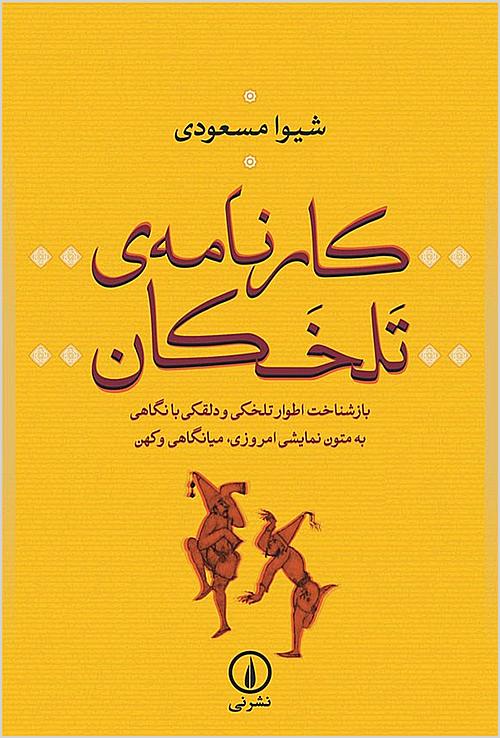
Downloadable Book
Kārnāmah-ʼi talkhakān: bāzshinākht-i aṭvār-i talkhakī va dalqakī bā nigāhī bih mutūn-i namāyishī-i imrūzī, miyāngāhī va kuhan
کارنامه ی تلخکان: بازشناخت اطوار تلخکی و دلقکی با نگاهی به متون نمایشی امروزی میانگاهی و کهن
Price range: £14.00 through £35.00
 table of contents, Preface. Sample pages
The book Kārnamah-yi Talkhakān explores the cultural and theatrical legacy of the clown figure in Iranian dramatic literature. Shīvā Masʿūdī traces the historical and performative evolution of the Iranian clown, seeking to recover its blurred lineage and affirm its lasting presence in Iran’s performance culture. Recognised in the 8th Annual Awards for Dramatic Literature for her contribution to research, the author argues that the Iranian clown’s role has not been limited to figures like Karīm Shīrahʾī of the Qājār court or traditional forms such as Mubārak, Khaymeh-shab-bāzī clowns, or Siyāh in Siyāhbāzī. Rather, its roots run deep, suggesting an ancient and enduring lineage. The book presents its analysis in four chapters, mapping the transformation of the clown across time and asserting that its performative identity cannot be understood without recognising the continuity of its historical presence.
کتاب کارنامه تلخکان به شناخت نیاکان دلقک و بازیابی حضور او در ادبیات نمایشی ایران، با ردیابی شکلهای متفاوت گذشته و امروز آن پرداخته است. شیوا مسعودی کوشیده است خطوط محوشدهٔ مسیر تاریخی دلقک را روشن و مانایی این شخصیت را در قلمرو فرهنگی و نمایشی اثبات کند. از این نویسنده در هشتمین دورهٔ انتخاب آثار برتر ادبیات نمایشی در بخش پژوهش ادبیات نمایشی (تألیفی) بهخاطر نگارش کتاب حاضر تقدیر شده است. او گفته است که دلقک ایرانی تنها در هیئت افرادی همچون «کریمشیرهای» (دلقک راهیافته به دربار ناصری) و در ادامهٔ آن دلقکهای نمایش سنتی ایرانی مانند مبارک، دلقک خیمهشببازی و سیاه، دلقک سیاهبازی در متن قرار دارد، اما سرگذشت پیش و پس از آن مبهم است. ویژگی و کارکرد دلقک در این دورهٔ در متنبودگیِ هر چند کوتاه نشان داده است که شکلگیری دلقک نمایشی جز با تباری کهن و قدرتمند امکانپذیر نیست؛ پس وجود گروههایی تباری تا نقطهٔ مرکزی (دلقک نمایش سنتی) و تغییر آن در شکلهای متفاوت با امروز ضروری است. این کتاب در چهار فصل به رشتهٔ تحریر درآمده است.
Related products
Book