Downloadable Collection
 Downloadable Collection
Kāvah, Rūznāmah-i (Qājār) – Collection of 7 years, 58 issues
روزنامه کاوه (قاجار) - آرشیو ۷ سال شامل ۵۸ شماره
Price range: £107.25 through £320.00
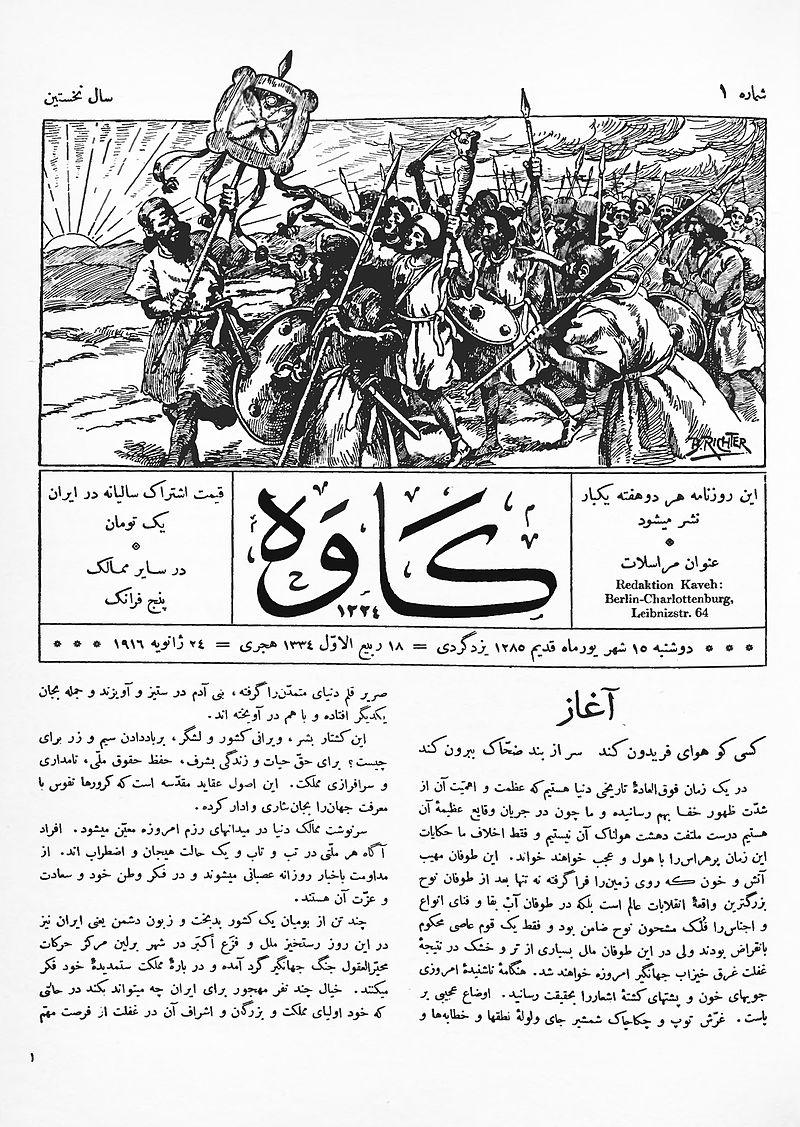
On the third day of Bahman 1294, the first issue of "Rūznāmah-i Kāvah" was published in Berlin, Germany, under the efforts and management of "Ḥasan Taqīʹzādah" and in the Persian language. This magazine was one of the most important sources about antiquarianism in Iran.
During the First World War, Rūznāmah-i Kāvah was published by a political group called "National Defense Committee" to strengthen nationalist, anti-Russian and pro-German sentiments among Iranians under the guise of archaism. One of the reasons why Taqīʹzādah chose "Dirafsh-i Kāvīānī" as the emblem of his publication was that he believed that Dirafsh-i Kāvīānī should be the national emblem of Iranians instead of the lion and sun emblem. Because he claimed that Dirafsh-i Kāvīānī, unlike Lion and Sun, dates back to before Islam.
Kāvah publishing is divided into two periods. The first edition of the magazine started on the 18th of Rabīʻ al-Awwal 1334 (3rd Bahman 1294 A.D. - 24th January 1916 A.D.) and it was published until 15 issues. This period was parallel to the First World War. During this period, Kāvah was a political magazine, and most of its content was in favour of Germany and its allies (Ottoman, Austria and Bulgaria). This serial in its new period from 1338 to 1340 H.Q. published regularly one issue per month.
In its first period of publication, Kāvah was considered the organ of the Democratic Party and had political and propaganda content. The second period of publication of Kāvah in the form of an analytical monthly began in Berlin, and unlike the first period, which had a purely political approach, this time the magazine was published with a critical approach to Iran's socio-political issues and with an intellectual approach.
Among the authors of this magazine, we can mention such people as Muḥammad Qazvīnī, Muḥammad ʻAlī Jamālzādah (alias Shāhrukh), Ḥusayn Kāẓimʹzādah Īrānshahr, Riz̤ā Tarbīyat, Ismāʻīl Amīrʹkhīzī and Abū al-Ḥasan Ḥakīmī.
Available issues:
- 1334 H.Q. (13 Issues: No. 1-13)
- 1335 H.Q. (10 Issues: No. 14-23)
- 1336 H.Q. (7 Issues: No. 24-30)
- 1337 H.Q. (5 Issues: No. 31-35)
- 1338 H.Q. (7 Issues: No. 36-42)
- 1339 H.Q. (12 Issues: No. 44-47, 1-8)
- 1340 H.Q. (4 Issues: No. 9-12)
روز سوم بهمن ۱۲۹۴ خورشیدی اولین شماره نشریه «کاوه» به همت و مدیریت حسن تقیزاده و به زبان فارسی در برلین آلمان منتشر شد. این مجله از جمله مهمترین منابع پیرامون باستانگرایی در ایران به شمار میآمد.
نشریه کاوه در جریان جنگ جهانی اول توسط مجموعهای سیاسی با نام «کمیته دفاع ملی» منتشر میشد تا در پوشش باستانگرایی احساسات ملیگرایانه و ضد روسی و موافق با آلمان را در میان ایرانیان تقویت کند. یکی از دلایلی که تقیزاده درفش کاویانی را به عنوان نشان نشریه خود انتخاب کرده بود این بود که وی عقیده داشت درفش کاویانی باید بجای نشان شیر و خورشید نشان ملی ایرانیان باشد. زیرا مدعی بود که قدمت درفش کاویانی برخلاف شیر و خورشید به پیش از اسلام میرسد.
چاپ و نشر کاوه به دو دورهٔ اول و دوم تقسیم میگردد. دورهٔ اول چاپ مجله از روز ۱۸ ربیعالاول ۱۳۳۴ (سوم بهمن ۱۲۹۴ شمسی – ۲۴ ژانویهٔ ۱۹۱۶ میلادی) آغاز شد و تا ۱۵ شماره انتشار یافت. این دوره مقارن بود با جنگ جهانی اول. در این مدت، کاوه یک نشریهٔ سیاسی بود که بیشتر محتوای آن طرفداری از آلمان و متحدانش (عثمانی، اتریش و بلغارستان) بود. این نشریه در دورهٔ جدید خود از سال ۱۳۳۸ تا ۱۳۴۰ ه. ق. به طور منظم هر ماه یک شماره منتشر میشد.
کاوه در نخستین دوره چاپ خود در واقع ارگان حزب دموکرات به شمار میرفت و محتوایی سیاسی و تبلیغاتی داشت. دوره دوم انتشار کاوه در قالب ماهنامهاى تحلیلی در برلین آغاز گردید و برعکس دوره نخست که رویکردى صرفا سیاسى داشت، این بار مجله با رهیافتى انتقادی به مسائل اجتماعى ـ سیاسى ایران و با رویکردى روشنفکرانه منتشر میشد.
از جمله نویسندگان این مجله میتوان به کسانی چون محمد قزوینی، محمدعلی جمالزاده (با نام مستعار شاهرخ)، حسین کاظمزاده ایرانشهر، رضا تربیت، اسماعیل امیرخیزی و ابوالحسن حکیمی اشاره کرد.
Rūznāmah-i Kāvah (Qājār)
Related products
Collection
Shafaq-i Surkh, Rūznāmah-i (Qājār, Pahlavi I) – Collection of 15 years, including 2618 issues