Downloadable Book
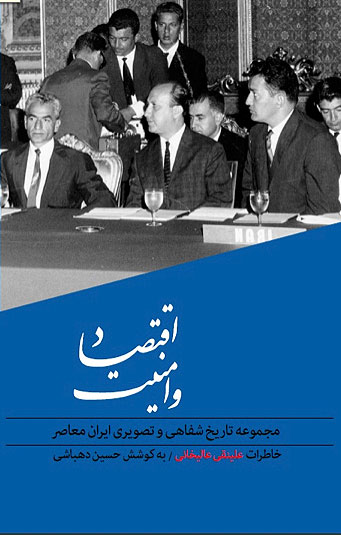
Majmūʻah-i tārīkh-i shifāhī va taṣvīrī-i Īrān-i muʻāṣir; Jild-i 4: Iqtiṣād va amnīyat: Tārīkh-i shifāhī-i zindagī va ās̲ār-i ʻAlīnaqī ʻĀlīkhānī
Iran Oral and Visual History Project; Vol 4: Economic and Security; The Memoirs of Ali Naghi Alikhani
مجموعه تاریخ شفاهی و تصویری ایران معاصر؛ جلد ۴: اقتصاد و امنيت؛ تاريخ شفاهی زندگی و آثار علينقی عاليخانی، وزير اقتصاد، رئيس دانشگاه تهران
Price range: £18.00 through £45.00
 Table of contents, Preface, Introduction, Sample pages
Alinaghi Alikhani was born in Tehran in 1928. His father, Abedin Khan, was a Kazakh petty officer, and base on his friendship with Reza Khan became the supervisor of his property and estates in Takestan in Ghazvin, and later did the same job for Taj’olMolouk. Alikhani graduated in political science from Tehran University. In 1950, he departed to France to follow his studies and got his DEA in International Law and later on received his doctorate in economics.
He returned to Iran in 1958 and was employed in the prime minister office and then the National Oil Company and at the same time was a consultant to the Tehran Trade Chamber. In February 1962, he became the minister for economics and was in office till 1969. He was Tehran University chancellor between 1969 and 1971. Afterward he left public activities and worked with private sector.
The researchers and publishers of the current book would like to emphasis that all statements made by the interviewees in the Iran contemporary oral and visual history research program, including the current interview, solely represent the views of the interviewee and despite all the values it bears in approaching a firsthand narration of Iran’s contemporary history, it is subject to imprecision due to inaccuracy in interviewee’s memoir, verbal errors, or even intentional false recitation of the events and incorporating self interests, exaggeration and incorrect comments and therefore it could be misleading in some occasions.
While all due efforts is taken to publish a comprehensive and accurate manuscript by adding clarifying comments, Pictures, documents and the like, it is necessary to remind our dear readers that in historical studies the only way to approach the true version of events is a patient review and a critical and smart comparison of all controversial and dispersed documents and stories.
It is also noteworthy that according to oral history research guidelines, except in few inevitable occasions indicated and left blank in the text, the current manuscript comprises the entire interview without any change or alteration in the interviewee’s expressions. However, to help the smooth reading and clear understanding of the context the following editing guidelines have been followed:
1) All interviews, once converted into text, have been edited according to the Persian Literature and Language Academy script principle and to help the readers, punctuation marks have been added to the text and turned into paragraphs. All Latin or non Persian words used by the interviews have been written in English script in the footnote.
2) The text in the current book has been clarified in four level:
a. Non Persian words and statements or those needing explanation were clarified.
b. Professional or technical terms and jargons related to economics, natural science, military, political etc. were explained.
c. Events, occasions and social and historical happenings were introduced.
d. False statements or clear historical miscue were indicated and described.
In each occasion the Iran Oral History project Clarification group has referred to firsthand and reliable references such as encyclopedias, professional books, documents and archives according to the subject and also all related contemporary history. Moreover, in specific cases with historical importance, relevant individuals mentioned by the interviewees or their relatives and close people or witnesses to the historical events were referred in person or through mail and their comments has been precisely included in the footnotes providing all commenter’s details. Historical documents including letters, news published in papers and pictures were also added as appendix at the end.
Related products