Downloadable Book
 Downloadable Book
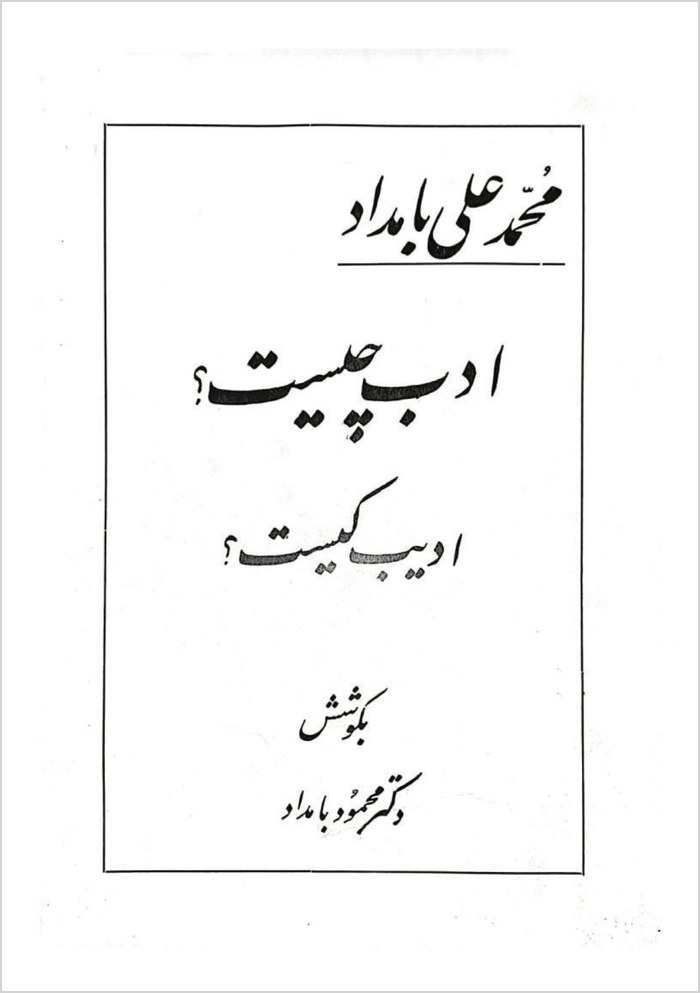
Adab chīst? Adīb kīst?
ادب چیست؟ ادیب کیست؟
Price range: £10.20 through £28.00
This posthumous study gathers the literary lectures and reflections of Muḥammad ʻAlī Bāmdād, sometime president of the Literary Society of Īrān, compiled and edited by his son Maḥmūd Bāmdād from notes left after the author's death. Cast in a fresh, accessible style, it asks the two questions that give the work its title: what is adab, and who is the adīb? Beyond expounding the conventional rules and craft of Persian letters, illustrated with apt examples and verse, the book draws a careful distinction between adab-i darsī, the formal literature of instruction, and adab-i nafsī, the cultivation of the inner self. It is this second sense, the moral and humane training of character, that the author places at the centre, presenting refinement of the soul as the higher aim of true learning. Readers meet celebrated figures of Persian literature alongside fresh observations seldom found elsewhere, making the volume a rewarding guide for all who seek both eloquence and ethical depth.
این کتاب، یادگار قلم و اندیشهٔ مرحوم محمدعلی بامداد، ادیب نامدار و رئیس انجمن ادبی ایران، است که پس از درگذشت او به همّت فرزندش دکتر محمود بامداد از میان یادداشتهای پراکنده گردآوری و برای نخستین بار به چاپ رسیده است. نویسنده با زبانی تازه و روان، و با بهرهگیری از نتیجهٔ سالها مطالعه و معاشرت با اساتید و بزرگان ادب، دو پرسش بنیادین را پی میگیرد که عنوان اثر از آن برآمده است: ادب چیست و ادیب کیست؟ بامداد، فراتر از بیان قواعد و فنون ادب فارسی که با شواهد و امثال فراوان همراه شده است، میان «ادب درسی»، یعنی دانش و آموزش رسمی ادب، و «ادب نفسی»، یعنی پروردن و آراستن درون، تمایزی ظریف مینهد و تأکید و همّت خود را بر تربیت اخلاقی و انسانی استوار میسازد. در نگاه او، آراستگی جان و پاکی نهاد، غایت برتر دانشاندوزی است. خواننده در این رساله با احوال و آثار بزرگان ادب آشنا میشود و نکتههایی تازه مییابد که در منابع دیگر کمتر نشان از آنها هست؛ از این رو اثری راهگشا و سودمند برای جویندگان فصاحت و فضیلت به شمار میآید.
Related products
Book